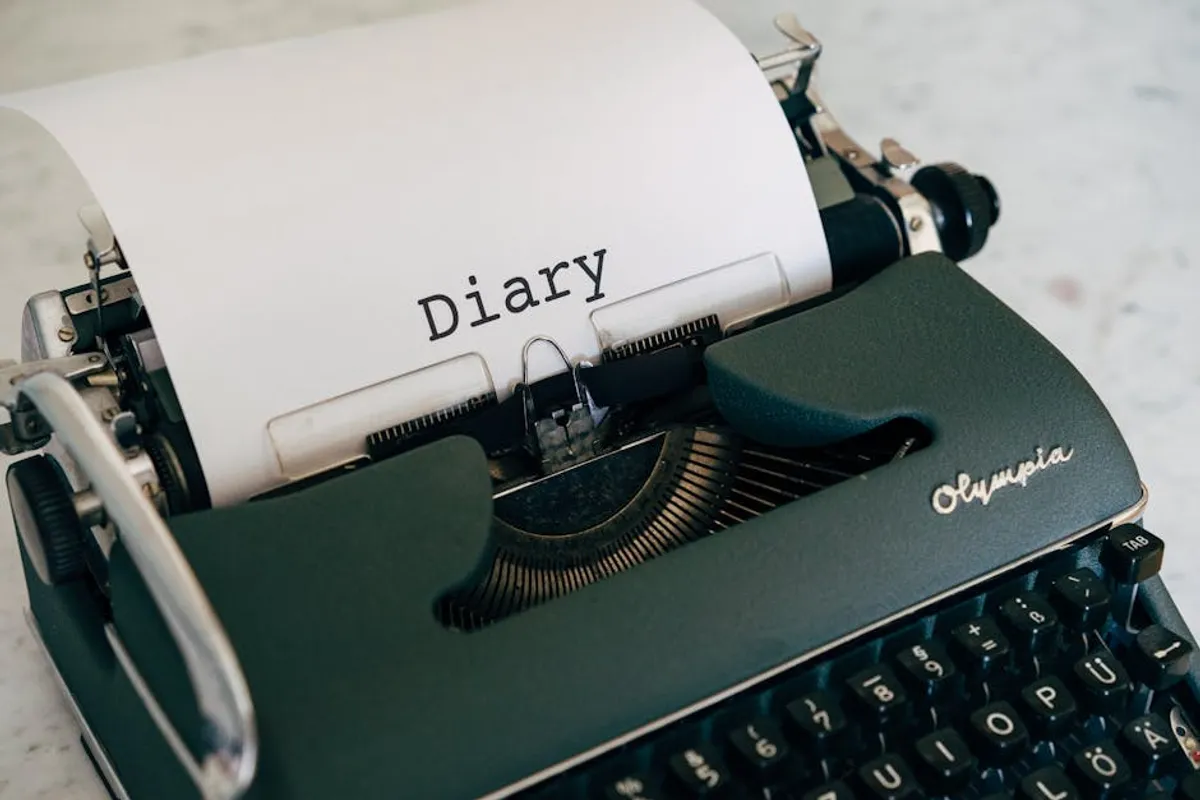
For creative writers, journaling transcends a mere personal habit; it serves as a critical strategic tool for idea generation, skill refinement, and maintaining consistent output. In a competitive landscape where unique voice and compelling narratives drive commercial success, a structured journaling practice can be the differentiator. This isn't about aimless diary keeping, but rather a deliberate engagement with your creative process to unlock new perspectives, solve narrative challenges, and cultivate the discipline essential for sustained writing careers.
The right journaling approach can mitigate writer’s block, deepen character development, or unearth unexpected plotlines. It acts as a low-stakes environment for experimentation, allowing writers to test concepts, explore themes, and refine their craft without the pressure of a formal draft. Understanding the specific benefits of different journaling methods allows writers to select practices that directly address their current creative needs, whether that involves overcoming stagnation, expanding a fictional world, or simply keeping the creative channels open and active.
How to Select Your Journaling Approach
Choosing an effective journaling method requires aligning the technique with your specific creative goals. Consider what you aim to achieve: is it rapid idea generation, deep character exploration, plot problem-solving, or overcoming creative inertia? Evaluate the time commitment each method demands against your available schedule; consistency often outweighs intensity. Reflect on your personal working style: do you thrive with structured prompts, or does free-form exploration yield better results? Some writers benefit from a highly analytical approach, breaking down narrative elements, while others find flow in uninhibited stream-of-consciousness. The most commercially viable journaling practice is one you can sustain, and which directly feeds into your writing projects, enhancing efficiency and output quality rather than merely consuming time.
1. Morning Pages
Morning Pages, as popularized by Julia Cameron, involve three pages of longhand, stream-of-consciousness writing, completed first thing in the morning. The core premise is to empty the mind of its "junk" – worries, to-do lists, anxieties – before engaging in creative work. This practice is not about crafting prose or solving specific plot points, but rather about clearing mental clutter to create space for genuine creative thought later in the day. The act of writing without judgment or revision trains the mind to bypass self-censorship, which often stifles original ideas and authentic voice.
Best for: Writers struggling with self-censorship, creative blocks, or mental clutter that impedes focus. Ideal for establishing a consistent daily writing habit and fostering mental clarity.
Pros:
- Reduces creative inhibition by encouraging non-judgmental output.
- Establishes a foundational daily writing routine, boosting discipline.
- Often unearths latent ideas or emotional insights relevant to creative projects.
- Improves mental clarity and reduces anxiety by externalizing thoughts.
Cons:
- Requires a significant time commitment (typically 20-40 minutes) first thing daily.
- Can feel aimless if the writer expects immediate, tangible plot solutions.
- The longhand requirement can be a barrier for some, potentially slowing the process.
Verdict: A powerful, foundational practice for cultivating a clear, receptive creative mind, essential for long-term output. Its value lies in process over product, indirectly enhancing all subsequent writing.
2. Stream of Consciousness Free Writing
Stream of Consciousness Free Writing involves writing continuously for a set period (e.g., 10-20 minutes) without stopping, editing, or rereading. The objective is to capture thoughts as they occur, allowing associations to form organically. Unlike Morning Pages, which serve a general mental clearing purpose, free writing can be directed with a specific prompt or question relevant to a current writing project, such as "What does Character X truly fear?" or "What happens next in Chapter 3?" This method bypasses the internal editor, accessing raw ideas and unexpected connections.
Best for: Overcoming writer's block on specific scenes or plot points, generating raw ideas quickly, and exploring character motivations without immediate structural constraints.
Pros:
- Rapidly generates a high volume of unedited text, providing raw material.
- Excellent for breaking through mental barriers and self-doubt on specific topics.
- Can be easily integrated into short bursts throughout the workday.
- Reveals unexpected connections and insights by following natural thought patterns.
Cons:
- Output can be disorganized and require significant sifting for usable content.
- May not suit writers who prefer a more structured or analytical approach from the outset.
- Risk of drifting into irrelevant topics if not loosely guided by a prompt.
Verdict: An effective technique for immediate idea generation and overcoming specific creative hurdles, best used when a writer needs to unblock a scene or deepen a particular narrative element quickly.
3. Character Deep Dive Journaling
This method focuses exclusively on developing characters by answering specific questions about their past, present, and future. Prompts can range from their childhood memories and defining moments to their deepest desires, fears, and internal conflicts. Beyond basic demographics, the goal is to uncover psychological nuances, motivations, and potential inconsistencies. Writers might explore a character's "darkest secret," "greatest regret," or "unspoken ambition," building a comprehensive psychological profile that informs their actions and dialogue within the narrative. This detailed exploration helps create believable, multi-dimensional characters.
Best for: Writers developing complex characters, struggling with character motivation, or aiming for authentic dialogue and reactions within their stories.
Pros:
- Creates richly detailed and psychologically consistent characters.
- Informs authentic dialogue and plot choices driven by character motivation.
- Helps resolve character-related plot holes or inconsistencies.
- Provides a comprehensive reference for character traits throughout a long project.
Cons:
- Can be time-consuming, requiring dedicated sessions for each major character.
- Might feel like "busy work" if not directly applied to narrative development.
- Risk of over-developing minor characters beyond their narrative utility.
Verdict: Indispensable for writers prioritizing character-driven narratives, ensuring protagonists and antagonists possess believable depth and internal logic that strengthens the story's core.
4. Plot Outline and Scene Sketching
This journaling technique involves breaking down a narrative into its constituent parts: plot points, chapter summaries, scene beats, and transitional elements. Instead of writing full prose, the journal becomes a space for bullet points, short descriptions, and questions about pacing, conflict, and resolution. Writers can sketch out multiple possibilities for a single scene, explore different narrative arcs, or identify potential structural weaknesses. It’s a low-fidelity prototyping space for story architecture, allowing for rapid iteration and problem-solving before committing to extensive drafting.
Best for: Writers who need to structure complex narratives, resolve plot holes, experiment with pacing, or quickly iterate on scene ideas before writing full drafts.
Pros:
- Clarifies narrative structure and identifies potential plot weaknesses early.
- Facilitates rapid experimentation with different story arcs and scene approaches.
- Reduces wasted effort on drafting scenes that don't serve the plot.
- Provides a clear roadmap for drafting, improving writing efficiency.
Cons:
- Can feel overly analytical, potentially stifling spontaneous creative flow for some.
- Requires a clear understanding of story structure principles to be most effective.
- May not be suitable for discovery writers who prefer to let the story unfold organically.
Verdict: A highly practical method for ensuring structural integrity and logical progression in a narrative, saving significant revision time by front-loading plot development challenges.
5. "What If" Scenario Exploration
This method involves deliberately asking "what if" questions related to your story or characters and then exploring the ramifications in your journal. "What if the protagonist failed to achieve their initial goal?" "What if the antagonist was secretly working for the protagonist's ally?" These questions push the boundaries of the established narrative, forcing the writer to consider alternative timelines, motivations, and outcomes. This process often uncovers fresh conflicts, deeper themes, or unexpected twists that can elevate a story from predictable to compelling. It’s a powerful tool for injecting novelty and complexity.
Best for: Writers seeking to inject originality, deepen conflict, or discover unexpected plot twists in their narratives. Excellent for breaking out of predictable story paths.
Pros:
- Generates fresh, unexpected plot developments and character dynamics.
- Helps identify and resolve potential narrative clichés by seeking alternative paths.
- Encourages imaginative problem-solving within the story's framework.
- Can lead to entirely new story ideas or subplots.
Cons:
- Can lead to excessive narrative complexity if not managed, potentially derailing the core story.
- Requires a willingness to discard ideas that don't serve the primary narrative.
- May feel less productive if the "what if" questions are too broad or unfocused.
Verdict: A vital technique for writers aiming to surprise their readers and themselves, pushing narratives beyond the obvious to uncover richer, more engaging story possibilities.
6. Sensory Detail Log
A Sensory Detail Log focuses on meticulously recording observations from the real world using all five senses. Instead of general descriptions, the writer notes specific sights, sounds, smells, tastes, and textures encountered throughout the day. For instance, instead of "the street was busy," a log might read: "the metallic tang of exhaust fumes, the rhythmic squeak of a bus brake, the sharp glint of sunlight off a wet pavement, the distant rumble of a jackhammer, the sticky feel of humid air." This practice sharpens observational skills and builds a rich internal library of evocative details that can be drawn upon to make fictional settings and scenes more vivid and immersive.
Best for: Writers aiming to enrich their descriptive prose, make settings more immersive, and ground fantastical elements in tangible detail. Useful for all genres.
Pros:
- Significantly enhances descriptive writing, making scenes more vivid and engaging.
- Trains the writer to observe the world with greater precision and depth.
- Builds a personal repository of unique sensory details for future use.
- Grounds abstract concepts or fantastical elements in relatable, concrete experiences.
Cons:
- Requires consistent, conscious effort to observe and record details.
- Can feel like a tangential exercise if not directly applied to a current project.
- Risk of becoming overly detailed in narrative if not balanced with plot progression.
Verdict: Essential for writers who understand that immersive storytelling relies on concrete, sensory experiences, directly improving the quality and impact of their descriptive passages.
7. Dream Journaling for Symbolism
Dream journaling involves immediately recording dreams upon waking, focusing not just on the narrative but also on recurring symbols, emotions, and unexpected juxtapositions. Dreams often tap into subconscious thoughts and anxieties, presenting them in symbolic forms. For creative writers, these symbols can be mined for metaphorical language, unique imagery, or even core thematic elements for stories. This practice helps writers understand their own subconscious landscape, which can then be translated into richer, more resonant fictional worlds and character arcs. The goal is to interpret the emotional and symbolic resonance, not necessarily to create a literal plot.
Best for: Writers exploring symbolic meaning, metaphorical language, or seeking unique imagery and thematic depth for their narratives. Useful for surreal or psychological fiction.
Pros:
- Accesses subconscious material, leading to unique symbols and themes.
- Enhances metaphorical thinking and the ability to convey complex ideas indirectly.
- Can inspire unexpected plot elements or character motivations.
- Fosters a deeper understanding of personal archetypes and narratives.
Cons:
- Requires immediate recording upon waking, which can be difficult for some.
- Interpretation can be subjective and may not always yield direct narrative material.
- The content can sometimes be unsettling or difficult to process.
Verdict: A powerful, albeit abstract, tool for writers seeking to infuse their work with deeper symbolic resonance and unique, often surreal, imagery derived from the subconscious.
8. Dialogue Practice Journal
This method dedicates journal space to experimenting with dialogue, separate from the narrative prose. Writers can record snippets of overheard conversations, draft exchanges between characters to test their voices, or practice writing arguments, confessions, or comedic banter. The focus is purely on how characters speak, their unique cadences, word choices, and subtext. This helps develop distinct voices for each character, ensuring dialogue sounds natural, serves its purpose (revealing character, advancing plot, building tension), and avoids sounding generic or authorial. It’s a direct way to refine one of the most critical elements of engaging fiction.
Best for: Writers struggling with authentic character voices, stilted dialogue, or ensuring dialogue serves multiple narrative functions effectively.
Pros:
- Develops distinct and authentic voices for individual characters.
- Improves the natural flow and rhythm of spoken exchanges.
- Helps ensure dialogue advances plot, reveals character, and builds tension.
- Allows for rapid prototyping of various conversational scenarios.
Cons:
- Can feel disconnected from the main narrative if not regularly integrated.
- Requires careful listening and observation of real-world speech patterns.
- Risk of characters sounding too similar if not consciously differentiating voices.
Verdict: A highly practical method for mastering the art of dialogue, directly translating into more engaging, believable, and commercially appealing character interactions within a story.
9. Rejection and Resilience Journal
This journal is not for creative ideation but for processing the inevitable setbacks and rejections inherent in a writing career. It’s a space to record submission outcomes, analyze feedback (both positive and negative), and articulate emotional responses. The goal is to move past the immediate sting of rejection and extract actionable insights, such as identifying patterns in editorial comments or recognizing opportunities for revision. This practice fosters mental resilience, preventing burnout and maintaining motivation, which are crucial for long-term professional success in writing. It reframes rejection as data for improvement, not personal failure.
Best for: Professional writers navigating the submission and publication process, managing feedback, and maintaining long-term motivation and resilience against setbacks.
Pros:
- Fosters emotional resilience and prevents burnout from rejections.
- Provides a structured way to analyze feedback and identify areas for improvement.
- Tracks submission history and progress, offering a tangible sense of effort.
- Helps maintain a professional mindset, separating personal worth from editorial decisions.
Cons:
- Requires confronting potentially painful experiences directly.
- Can feel counter-intuitive to creative work, focusing on the business side.
- Might devolve into unproductive venting without a focus on analysis and growth.
Verdict: An essential tool for professional writers, transforming the often-demoralizing experience of rejection into a structured process for growth and sustained career longevity.
10. Idea Bank / "Swipe File" Journal
This journal serves as a repository for all nascent ideas, observations, interesting facts, compelling headlines, intriguing character names, or evocative phrases encountered daily. It’s a "swipe file" for creative raw material. Unlike other methods that focus on development, this is purely for capture and categorization. A writer might note a strange news headline that could inspire a plot, a unique phrase overheard in a café, or a compelling image from a dream. The goal is to never lose a potentially valuable seed of an idea, creating a rich wellspring to draw from when actively brainstorming or facing creative blocks. Organization (e.g., by theme, genre, or keyword) is key for future retrieval.
Best for: Writers who want to capture every fleeting idea, build a rich resource for future projects, and ensure no creative spark is lost. Ideal for prolific idea generators.
Pros:
- Ensures no valuable idea is forgotten, creating a continuously growing resource.
- Provides a quick source of inspiration when facing writer's block.
- Encourages constant observation and engagement with the world around you.
- Can spark connections between seemingly disparate ideas.
Cons:
- Requires discipline in consistent capture and organization to be effective.
- Can become overwhelming if not periodically reviewed and curated.
- Might lead to "idea hoarding" without corresponding development.
Verdict: A highly practical and commercially valuable method for ensuring a continuous pipeline of creative concepts, directly fueling future projects and content.
11. Prompt-Based Journaling
Prompt-based journaling involves responding to specific, pre-determined writing prompts. These can be drawn from online sources, books, or self-generated questions. Prompts might be abstract ("Write about a secret garden"), character-focused ("Describe a character who collects unusual objects"), or genre-specific ("Start a horror story with a single line of dialogue"). The structure provided by a prompt can be particularly useful for writers who struggle with a blank page or need a specific direction to kickstart their imagination. It's a low-pressure way to practice writing different styles, explore new themes, or develop a specific skill without the burden of a full narrative.
Best for: Writers seeking structured inspiration, overcoming blank page anxiety, or practicing specific writing skills (e.g., descriptive writing, dialogue, world-building) in a low-stakes environment.
Pros:
- Provides immediate direction, overcoming the inertia of a blank page.
- Exposes writers to diverse themes and styles they might not otherwise explore.
- Excellent for practicing specific writing muscles without committing to a larger project.
- Can generate unexpected ideas or short story concepts.
Cons:
- Reliance on prompts can hinder the development of self-generated ideas.
- Some prompts may not resonate, leading to unproductive sessions.
- Output can feel disjointed if not connected to a larger creative goal.
Verdict: A valuable method for consistent practice and overcoming initial resistance, especially for writers who benefit from external structure to ignite their creative process.
12. World-Building Journal
For speculative fiction writers (fantasy, sci-fi, historical fiction), a world-building journal is an indispensable tool. This journal is dedicated to meticulously detailing every aspect of a fictional world: its history, geography, political systems, cultural norms, magic systems, technology, languages, and even mundane daily life. Entries might include maps, timelines, character genealogies, descriptions of flora and fauna, or explanations of scientific principles. The goal is to create a consistent, believable, and rich setting that supports the narrative without overwhelming it with exposition. This process ensures internal logic and provides a deep well of detail to draw upon for immersive storytelling.
Best for: Speculative fiction writers