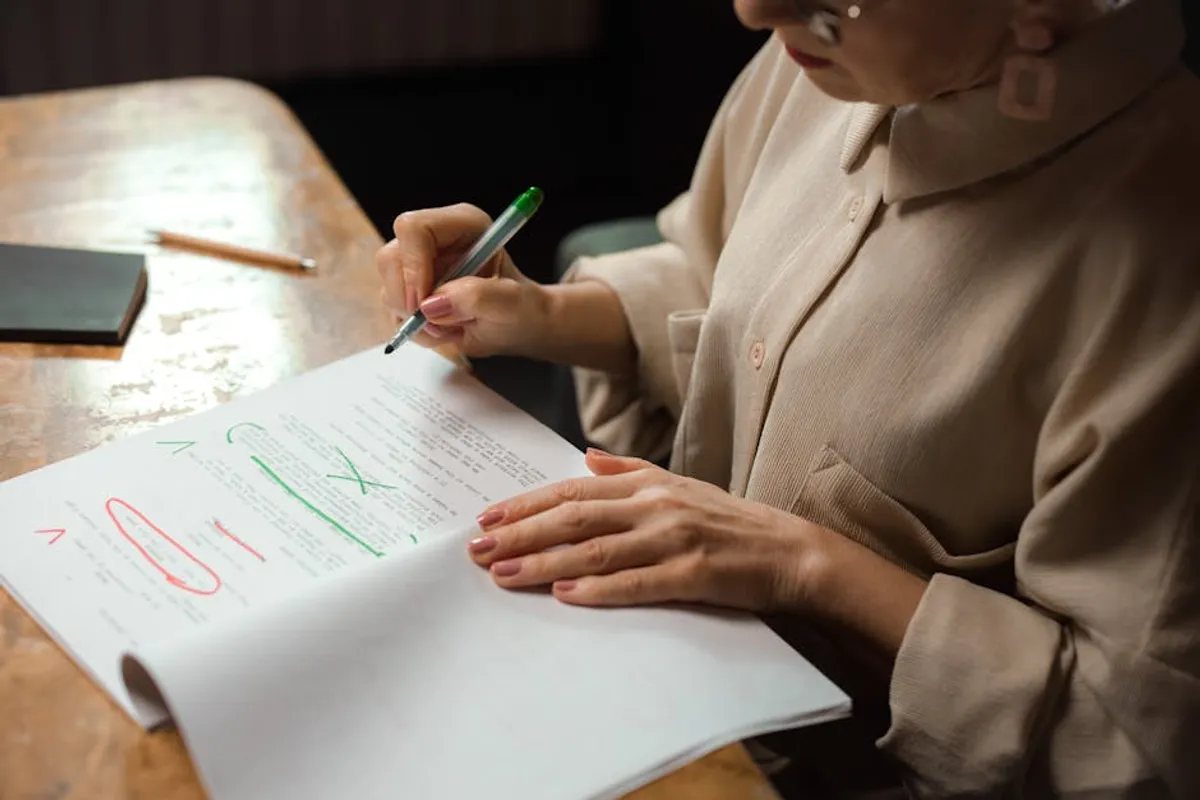
Effective proofreading is not merely a final scan for typos; it is a critical, systematic process that directly impacts the credibility and clarity of any written work, particularly essays. For students, well-proofread essays secure better grades and demonstrate meticulous attention to detail. For professionals, error-free communication reinforces expertise and trustworthiness. Overlooking this stage can undermine hours of research and writing, leading to misinterpretations, lost marks, or damaged professional reputation. The goal is to move beyond superficial checks and adopt structured methodologies that systematically eliminate errors, ensuring the final submission is polished, precise, and persuasive. Adopting a systematic approach to proofreading is key for students aiming for academic success and better grades.
Establishing a Systematic Proofreading Workflow
Approaching proofreading with a defined system prevents rushed, haphazard reviews that often miss subtle errors. A structured workflow ensures comprehensive coverage, addressing different error types in distinct passes.
Multiple Passes with Specific Foci
Instead of attempting to catch every type of error in a single read-through, segment your proofreading into several targeted passes. This allows your brain to concentrate on one category of issues at a time, increasing detection accuracy.
- First Pass: Content and Structure. Focus on the essay's overall argument, logical flow, paragraph transitions, and whether all claims are adequately supported. This is more akin to a final edit than pure proofreading, but it's essential for ensuring the essay makes sense before refining its mechanics.
- Second Pass: Grammar and Punctuation. Concentrate solely on sentence-level mechanics: subject-verb agreement, tense consistency, comma usage, apostrophes, and semicolons. Read each sentence in isolation to break the flow of meaning and expose grammatical inconsistencies.
- Third Pass: Spelling and Typographical Errors. Look specifically for misspelled words, transposed letters, and common typos. This pass benefits from techniques that disrupt normal reading patterns.
- Fourth Pass: Formatting and Citation Accuracy. Verify adherence to required style guides (e.g., APA, MLA, Chicago) for citations, bibliography, headings, page numbering, and overall document presentation. Inconsistencies here can detract from academic rigor.
Reading Aloud and Backwards
These techniques disrupt the brain's natural tendency to auto-correct or skim familiar text, forcing a slower, more deliberate engagement with each word.
Reading Aloud: Articulating each word forces you to process it individually, making grammatical errors, awkward phrasing, and missing words more apparent through auditory feedback. Your ears often catch what your eyes miss, especially concerning rhythm and sentence structure.
Reading Backwards or Sentence by Sentence: Starting from the last sentence and working your way to the beginning, or reading each sentence in isolation, removes the context of the essay's meaning. This isolates words and punctuation, making it easier to spot spelling mistakes, missing articles, or incorrect punctuation without the distraction of the narrative flow.
Leveraging Tools Thoughtfully
While no automated tool can fully replace human judgment, digital aids can augment the proofreading process by highlighting potential issues for human review. Their utility lies in identifying patterns and common errors, not in definitive correction.
Grammar and Spell Checkers
Integrated word processor tools and dedicated grammar checkers can identify obvious spelling errors, basic grammatical issues, and some stylistic suggestions. They are most effective as a preliminary sweep to catch clear-cut mistakes before a human review. However, these tools frequently misinterpret context, flag correct phrasing as incorrect, or fail to detect nuanced errors in syntax or meaning. Always use their suggestions as prompts for critical human evaluation, not as definitive corrections.
Text-to-Speech Software
Utilizing a text-to-speech reader can provide an auditory review similar to reading aloud, but with a different voice and pacing. Hearing your essay read back by a synthetic voice can highlight awkward phrasing, run-on sentences, missing words, or incorrect punctuation that your eyes might have glossed over. This externalized auditory input offers a fresh perspective, making it particularly useful for identifying issues related to flow and clarity.
Pro Tip: Implement a "cooling-off" period. After completing your essay draft, step away from it for at least a few hours, ideally a full day. This mental distance allows you to return with fresh eyes, reducing cognitive bias and increasing your ability to spot errors you previously overlooked. Proofreading immediately after writing often means your brain still "knows" what it intended to write, rather than what is actually on the page.
Cultivating an Optimal Proofreading Environment and Mindset
The physical and mental conditions under which you proofread significantly influence its effectiveness. A focused approach in a conducive environment yields superior results.
Minimizing Distractions
Proofreading demands intense concentration. Choose a quiet, uninterrupted space where you can dedicate your full attention to the text. Turn off notifications, close unnecessary tabs, and inform others of your need for quiet. A fragmented proofreading session is prone to errors, as each interruption breaks your focus and requires re-establishing your mental state.
Allocating Dedicated Time
Do not relegate proofreading to the last five minutes before a deadline. Schedule specific, unhurried blocks of time for this task. The duration should be proportionate to the length and complexity of the essay. Rushed proofreading inevitably leads to missed errors and increased stress. Breaking the proofreading into shorter, focused sessions spread over time can also be more effective than one long, exhausting session.
Understanding Your Common Error Patterns
Reflect on feedback from previous assignments or identify recurring mistakes you tend to make (e.g., comma splices, passive voice, confusing 'their' and 'there'). During a dedicated proofreading pass, specifically target these known weaknesses. Creating a personal checklist of your frequent errors can transform a general review into a highly efficient, personalized error-detection process.
Final Polish: Ensuring Impact and Precision
Improving essay proofreading moves beyond simply correcting mistakes; it’s about refining your writing to its highest potential. By adopting systematic workflows, leveraging tools judiciously, and cultivating a focused environment, you transform proofreading from a chore into a strategic component of effective communication. Each essay submitted becomes a testament to your thoroughness and commitment to quality, reinforcing your message with clarity and authority.
Frequently Asked Questions
What is the primary difference between editing and proofreading?
Editing focuses on the larger aspects of writing, such as content, organization, clarity, style, and overall coherence. Proofreading is the final stage, concentrating on surface-level errors like grammar, punctuation, spelling, and formatting, ensuring the text is mechanically flawless before publication.
How many times should I proofread an essay?
A minimum of three distinct passes is recommended, each with a specific focus (e.g., content flow, grammar/punctuation, spelling/formatting). Longer or more complex essays may benefit from additional passes, especially after a "cooling-off" period.
Can AI writing tools eliminate the need for human proofreading?
No. While AI tools can assist in identifying common errors and suggesting improvements, they frequently misunderstand context, miss nuanced errors, or introduce new mistakes. Human judgment remains essential for ensuring accuracy, stylistic consistency, and adherence to specific academic or professional standards.
What are the most common types of errors missed during proofreading?
Errors often missed include homophone confusion (e.g., "their" vs. "there"), missing articles ("a," "an," "the"), subject-verb agreement issues in complex sentences, inconsistent tense usage, and incorrect punctuation, particularly comma splices or run-on sentences.